
GLAVNOE: The Past Month in Russia, April 2026
Your monthly overview of major recent developments in Russian politics, economy, and society. April 2026 Issue.
Options after Orbán
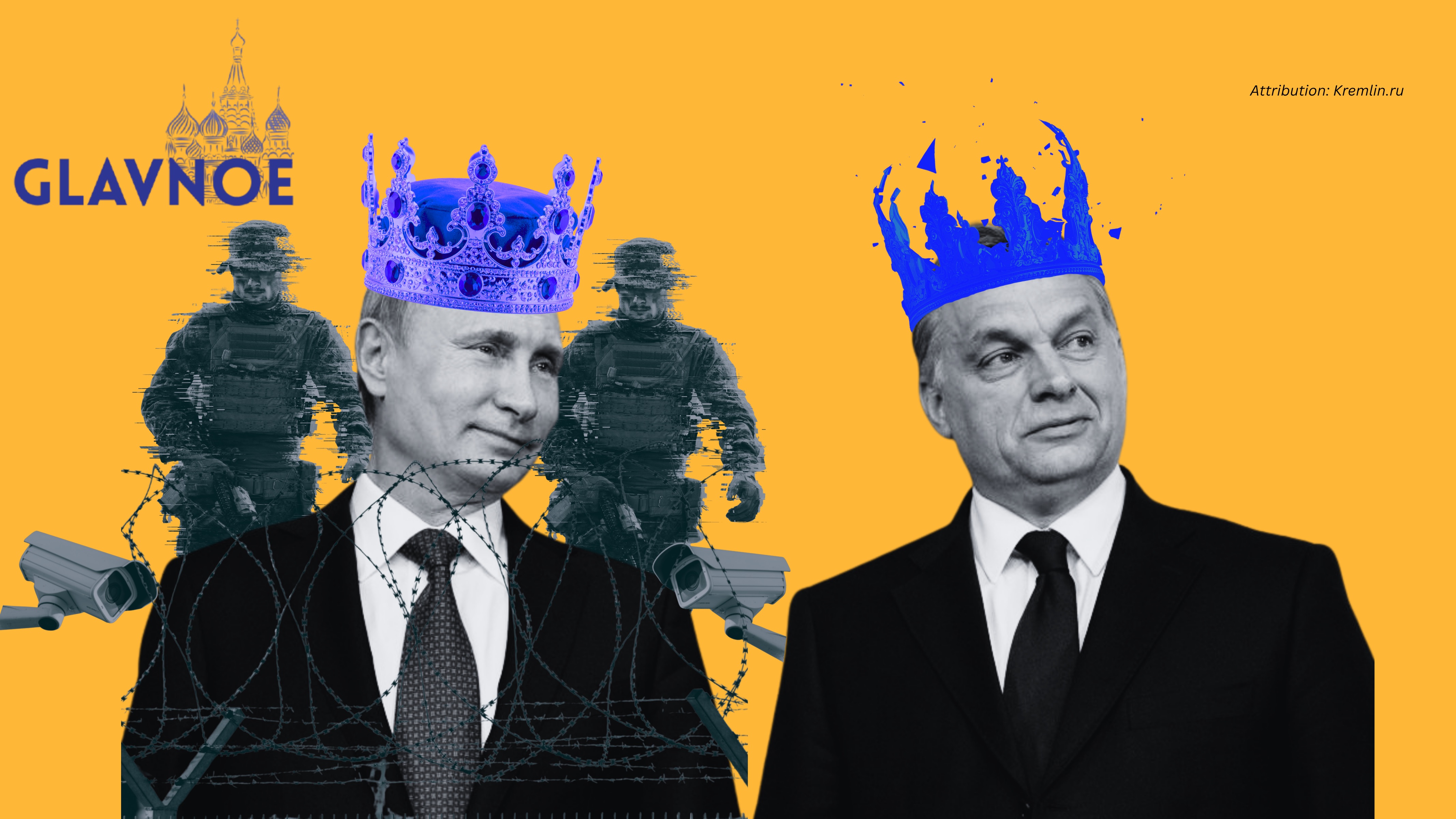
One of the most notable developments of the past month for the Kremlin happened about a thousand miles southwest of Moscow—in Hungary. On April 12, after a whirlwind campaign season, the government of Viktor Orbán—probably the Russian government’s most reliable partner in the European Union—was voted out of power after 16 years. The landslide vote handed a two-thirds supermajority to an opposition upstart, the Respect and Freedom (Tisza) party. This majority will allow the new government, which will be formed in mid-May, to dismiss or supersede any officials appointed by Orbán’s government and to change the constitution.
While Russia retains several other—more indirect—means of pressuring the European Union, the loss of Orbán deprives it of more than just an occasional tactical ally in the European Council. Under the outgoing prime minister and his foreign minister, Péter Szíjjártó, who proudly called his Russian counterpart, Sergey Lavrov, a friend, Hungary’s foreign policy was closely aligned with Russian interests. According to recently leaked wiretapped conversations between Szíjjártó and Lavrov, as well as between Orbán and Vladimir Putin himself, the government regularly informed and coordinated with the Kremlin and the Russian Ministry of Foreign Affairs about EU discussions regarding sanctions and the war in Ukraine. Hungary refused to expel Russian diplomats following the 2022 invasion of Ukraine, the government did not diversify Russia-dominated oil and gas imports, Orbán built a domestic propaganda campaign demonizing Ukrainians, and Russian military intelligence and foreign intelligence operatives were deployed prior to the vote to help Fidesz according to recent reporting. Notwithstanding this, in classic Kremlin fashion, Putin’s spokesperson, Dmitry Peskov, swiftly pivoted after the vote and expressed hope that the new government would be “pragmatic” in its dialogue with Russia, while downplaying the Kremlin’s closeness to Orbán.
Tisza is run by Péter Magyar, a former insider of Fidesz, Orbán’s party. Magyar certainly is no full-throated supporter of Ukraine, which would open the door to “pragmatism.” However, his party relies on a much wider grassroots movement, which reached all kinds of former opposition, inactive, and even many former Fidesz voters. These groups have had various problems with Orbán’s government, with grand corruption and the poor state of public services topping the list. The new government will likely focus on these rather than on Hungary’s foreign policy priorities. Relatively cheap and reliable energy, which can currently be provided mostly by Russia through pipelines (now that the damaged Druzhba has been reopened), is also an important element of economic and social stability. Magyar’s party has no plans to completely abandon the import of Russian oil and gas even in the longer term. However, unblocking EU development funds frozen due to Orbán’s assault on independent institutions will also be crucial to salvage Hungary’s budget under current global economic conditions. Magyar, who wants a swift deal, has already made it clear that he aims to anchor the country strongly in the EU camp: neither he nor his pick for foreign minister, Anita Orbán (no relation), are likely to act as Russian spoilers or vassals in the EU Council in the way the outgoing government did. Magyar has also hinted at sweeping personnel changes at all levels of the government, which will likely disrupt ongoing Russian influence operations. At his first press conference, while sidestepping the question about the 90 billion euro EU-guaranteed loan for Ukraine, Magyar strongly criticized the Russian government and announced an audit of the Rosatom’s Paks II nuclear power plant project. Days later, an op-ed on the website of the Russian state-owned RIA News Agency warned Magyar that ejecting Rosatom from the project would result in him “disappearing into the sunset of history” in four years—showcasing the Kremlin’s understanding of “pragmatism.” While Russia will likely keep as much pressure on the incoming government as possible, it is not unlikely that it will invest more resources in other means (and personalities) of influence in the EU to frustrate the EU’s support to Ukraine.
Oil Windfalls: Not a panacea
When it comes to the conditions crucial to maintaining its war in Ukraine, the Kremlin did not have all bad news over the past month. Windfall revenues triggered by the ongoing closure of the Strait of Hormuz hit the federal budget in April. Reuters calculated that the federal budget would realize 9 billion USD of extra revenues over the month, after the value of oil exports had more than doubled in March, in spite of consistent (and partly successful) Ukrainian strikes at Russia’s oil export infrastructure.
In the short term, this windfall allowed the Russian government to abruptly abandon plans for aggressive fiscal tightening. Before the price surge, the federal budget had reached a 4.57 trillion ruble deficit in the first quarter, already exceeding the planned deficit for the entire year. The authorities had been discussing a 10% across-the-board cut in budget expenditures (excluding social and military spending) and a revision of the so-called budget rule, which decides when oil and gas revenues are stored in the National Welfare Fund. With the April windfall, the government has deferred the reform of the budget rule until at least 2027 and cancelled the proposed spending sequester.
However, this extra revenue, which the Russian government plans to spend on prosecuting the war in Ukraine, will not solve the wider problems of the Russian economy and the country’s budget system. Elvira Nabiullina, the head of the Central Bank, downplayed the impact of the oil windfall and underlined the negative impact of the coming global economic downturn on already struggling civilian sectors, while the Russian economy is still struggling with capacity issues. Economy minister Maxim Reshetnikov more or less repeated Nabiullina’s points, adding that Russia’s economic reserves have been “exhausted.” To underline how concerned the Kremlin is about the state of the economy, Putin demanded twice that the government find solutions to kick-start growth, which remained well below expectations in the first quarter. Putin reportedly asked the country’s main employers to provide voluntary contributions to the budget. On top of this, the government’s planned 20% extra-profit tax seems to still be on the table as well, in spite of Putin’s personal promise to keep the key elements of the tax system stable. By establishing a national system for confirming anticipated goods deliveries, the government is strengthening control over commercial transactions to increase tax compliance. In a broader context, the accumulating problems may again lead to calls for the government to take firmer and more direct control over the economy.
Crucially, barring a wider economic upturn, neither the oil windfall nor an extra-profit tax will help regional budgets that finance vital state functions—such as hospitals, schools, and investments into housing and utilities—and rely on personal and corporate income taxes for most of their income, as well as on federal transfers and cheap budgetary loans to close the gap between incomes and expenditures. Regional budgets experienced a severe downturn of corporate income tax receipts in 2025, almost across the board. Roughly a third of regions were running deficits for the third consecutive year and many were covering the shortfall with expensive loans from the market, as federal transfers were cut back and budgetary loans are less available than before. Regions whose dominant industries—e.g., metals and coal mining—have entered a protracted crisis are especially vulnerable. A handful of regions have already been forced to amend their 2026 budgets in the first quarter of the year, and the reporting of liquidity problems affecting public employees is increasingly common. It is unsurprising, if still notable, that representatives of key regional businesses are openly raising alarm—most recently Vladimir Boglaev, the director of the Cherepovets Foundry and Mechanical Plant, who attributed a halt of growth across the economy to the government’s policies.
State Dysfunction and its Discontents
While the Kremlin hardly needs to be worried that a Hungary-style uprising in the ballot boxes over endemic corruption and a dysfunctional state will sweep it away in the near future, two years after the murder of Alexey Navalny, who wanted exactly this, state dysfunction still matters. Protests in the past months serve as a reminder.
Protests started in late March in the Novosibirsk Region against the forced culling of livestock under the pretext of fighting “mutated pasteurellosis” (many people, including some experts, suspected this was actually an undeclared foot-and-mouth-disease outbreak). Rural populations in villages and many people outside of the region—including influencers—supported the protests. They were ultimately unsuccessful: using coercive tactics and law enforcement units, the authorities culled some 90,000 cattle across nine regions, including many that the owners said were not infected. In April, Novosibirsk governor Andrei Travnikov dismissed the region’s agriculture minister who was widely ridiculed for a video showing him running away from an affected farmer. The main issue was likely that the minister had let himself become an object of public ridicule rather than how the culling was handled. Nonetheless, the protests did showcase the increasingly fraught relationship between Russian citizens—often thought of as depoliticized subjects—and the local authorities. Affected residents, based on their prior experience, assumed a conspiracy benefiting large, politically connected enterprises and expressed doubt that the authorities (including the region’s strained budget) would be able to issue adequate compensation payments. They also tried to appeal directly to the federal authorities to put pressure on the regional government.
The situation was similar as catastrophic flooding, described as the worst in a century in the North Caucasus, destroyedthousands of homes and critical infrastructure in Dagestan and Chechnya. In Dagestan, governor Sergey Melikov put the blame on residents circumventing construction regulations; however, locals have also questioned the authorities’ competence and corruption that affected the maintenance of drainage systems and led to people relying on each otherrather than expecting help from the authorities. This is not the first time that government incompetence has been exposed by heavy flooding, with people demanding political consequences. In 2024, the collapse of a dam in the Orenburg Region town of Orsk triggered protests, and in 2019, the then governor of the Irkutsk Region was forced to resign due to his government’s ineffective flood response. It remains to be seen whether this is going to be Melikov’s fate too—the fact that the federal government took direct charge of flood response does not bode well for the governor. However, it is also questionable whether the appointment of a new governor will fundamentally change the incentives that underlie Russia’s regional governance where money is increasingly tight and leaders are accountable to higher positions.
Related Research
GLAVNOE: The Past Month in Russia, June 2026
Your monthly overview of major recent developments in Russian politics, economy, and society. June 2026 Issue.
The War Has Reached Moscow, and the Russian Propaganda Machine Seems Lost
History shows that Russia rarely changes its behavior out of goodwill. But it has repeatedly changed its calculations when confronted with sufficiently strong and persistent pressure.