
GLAVNOE: The Past Month in Russia, February 2026
Your monthly overview of major recent developments in Russian politics, economy, and society. February 2026 Issue.
Tightening the digital screws

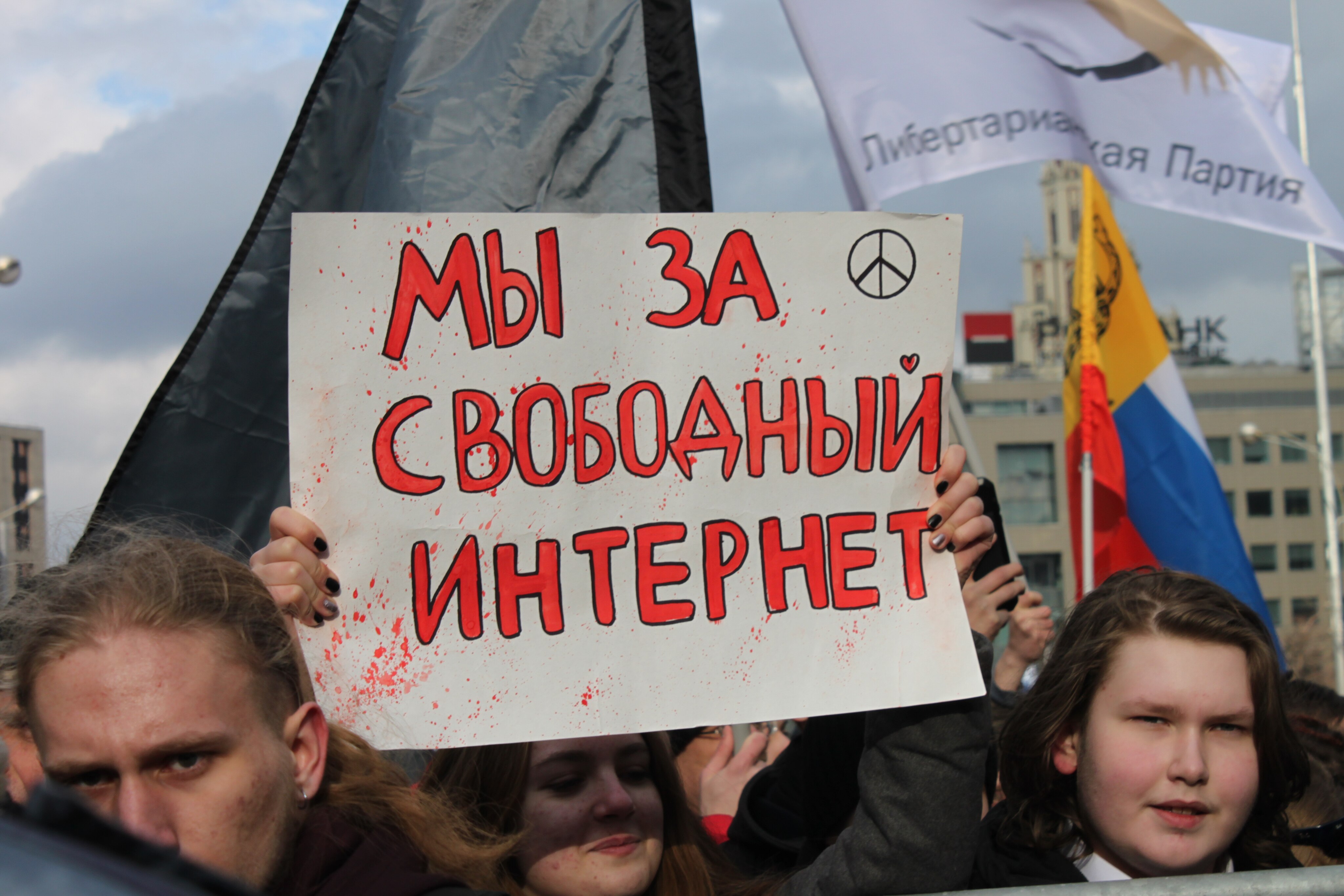
February saw the Russian authorities tighten the screws on the remainders of digital freedoms in the country, in line with (at least the surface-level understanding of) the stated goal of “digital sovereignty”. Two measures stand out. One of them is new law giving the Federal Security Service (FSB) sweeping new powers to cut all telecommunications — including mobile internet, fixed internet, voice calls, and SMS — across any part of Russia, based on a closed presidential decree, leaving access only to a handful of domestic services controlled or supervised by the government. This new law formalizes and legally backstops what has been ad-hoc practice, particularly in border regions, by shielding network operators from complaints and lawsuits, which some users had tried to experiment with. The other measure is an announcement that the Kremlin would ban access to WhatsApp and try to block the Telegram messaging app. The Kremlin has long since targeted both apps; WhatsApp especially since its owner, Meta, had been placed on the list of “terrorist and extremist organizations” in 2022 and access to Meta’s other products was blocked. The authorities had earlier accused Telegram of not doing enough to fight fraud, but this time the official explanation was that “foreign intelligence services” had access to information sent through the app.
The latest restrictions fit into the strategic goal of the Kremlin to effectively separate the Russian internet from online services and sources of information that are based abroad or are outside of the control of the authorities – a goal enshrined in the so-called “sovereign internet” law of 2019.
Ultimately, how widely the restrictions will be used will also depend on the Kremlin’s perception of immediate political risks. In the absence of legal recourse, shutdowns will add to citizens’ general frustrations with the government, as they have in many regions since last May, when they started happening intermittently. But the Kremlin seems to hope that governors will continue to act as a political shield and either assume direct political responsibility for the adverse effects of the outages or, better still, help to collect and channel signs of public frustration with the measures. Earlier, for example, the head of Kamchatka, Vladimir Solodov tried to push back against the shutdown of mobile internet in the region during a massive winter storm when communications channels had to be kept as open as possible.
Blocking Telegram is a more complex question. Not only have the Russian authorities failed to produce a palatable alternative to the app (many Russians are wary of the state-linked “MAX” messenger for fears of digital espionage and the well-known track record of the Russian authorities of collecting and using sensitive personal data against citizens), but also due to the app’s vital importance to private and public sectors alike. The private sector widely uses Telegram for advertisement, internal communication and the testing of apps, and a forced overnight switch to MAX, even if it is technically feasible, would likely deliver a short, sharp shock to an already weakening private sector. Russia’s political operatives and communications specialists have also spent considerable time and money on building audiences and influence networks on the app. It is notable that not only did nationalist “Z bloggers” push back against the plans to block Telegram, but Vyacheslav Gladkov, the head of the Belgorod Region and one of the most followed regional governors on the app also warned that Telegram throttling would endanger communication between the authorities and citizens in a region that often faces attacks from Ukraine.
For this reason, the authorities have quickly corrected course and announced that for now they are not going to try to block Telegram in the war zone. It is not unlikely that the authorities are simply trying to increase pressure on Telegram in a pre-election period, just as they did prior to the 2021 Duma election when they succeeded in forcing the app to block a bot developed by Alexey Navalny’s campaign designed to frustrate the Kremlin’s electoral engineering. For the foreseeable future, a “hybrid” use of both Telegram and MAX for various purposes looks likelier. But in the long run, the Kremlin will undoubtedly keep trying to implement measures to gradually undermine Telegram.
Arrests and other electoral preparations
The further restriction of digital freedoms is just one part of the preparations for the September federal legislative and regional elections. Recent weeks have also seen a significant escalation in law enforcement action against politicians in the so-called “systemic” opposition, particularly in the Communist Party (KPRF), as well as targeted electoral engineering in several regions ahead of the elections. The most intensive crackdown has occurred in the Altai Territory, home to one of the country's strongest KPRF branches, which had organized and supported protests triggered by bread-and-butter issues in recent years. There, law enforcement conducted searches at the homes of seven party assistants and the editor of the party newspaper. Two deputies, accused of embezzlement, were detained. Maria Prusakova, a State Duma deputy and regional party leader, has faced rumors of an impending criminal case against her, which she has denounced as a “political order”. In Buryatia, a local deputy was fined for an “unsanctioned” meeting with voters to discuss a recently adopted law allowing extensive logging near lake Baikal, which had led to protests in several regions bordering the lake.
The authorities started regarding deputies’ meetings with voters as “unsanctioned protests” last year when several local politicians in Siberia and the Far East sided with citizens protesting the Kremlin’s municipal administration reform. Local law enforcement authorities also interrogated and arrested several communist politicians and party workers in late 2025. Recent developments can thus be regarded as merely an intensification of the trend, an attempt to discourage the local branches of systemic opposition parties from behaving like actual opposition and allying themselves with local civil initiatives. The Kremlin would also likely prefer reducing the number of mandates occupied by systemic opposition parties in regional legislatures in favor of the ruling United Russia party, which it controls more directly, and which has so far been one of the main vehicles of helping returning war participants to (usually powerless) elected positions.
These developments are also indicative of what regions the federal government regards as potentially problematic due to active opposition structures and/or acute social grievances. Electoral engineering also plays a role in this. For instance, in the Vologda Region, which has faced rapidly falling fiscal income and social tensions due to some of the policies of its ultraconservative governor, the regional legislature has recently moved to abolish the so-called “general” part of party lists, effectively ending the practice of party “locomotives” (well-known politicians who head lists to boost ratings but refuse mandates). Meanwhile, the Lipetsk and Kursk Regions have decided to reduce the number of mandates distributed via party lists in favor of single-mandate districts, which also benefits the ruling party. This is the general direction that electoral legislation has evolved in the regions and cities over the past years, but as the federal Duma election may raise turnout even in traditionally less interesting regional races, the last-minute tinkering with the rules suggests that the authorities still see potential risks at the regional level, even with the current degree of political control.
Not so stainless
One of the looming political risks in several regions, which could hit before the September elections, is the metallurgical industry sliding into a protracted crisis. In mid-February, steelmakers reported to deputy prime minister Alexander Novak that the sector’s revenues fell by 16% and its EBITDA (Earnings Before Interest, Taxes, Depreciation, and Amortization) by 50% over the past year, forcing companies to make thousands of layoffs (labor market data from FinExpertiza suggests that the common practices of furloughing and shortened working weeks likely mask a larger employment crisis). The CEO of Severstal, Russia’s biggest steel producer, estimated that domestic metal consumption fell by 18 percent in 2025, dragging the company’s profit down by 42 percent. A government-linked Russian think tank, Center for Strategic Research (CSR) estimated the profitability rate of the whole metallurgical sector dropping to 9.3 percent in 2025 (down from 28.7 percent in 2021, the sector’s last bumper year) as domestic demand in civilian sectors, such as construction, is dropping and exports face a squeeze.
At the same time, beyond tax deferments and export support, which the government offered to the sector, and which would save them a relatively insignificant 15 billion rubles according to estimates, the government is reluctant to offer further help due to fiscal constraints and likely also due to fears that other sectors would demand similar preferential treatment. The Central Bank has been pushing against preferential lending to sectors, all while it is continuing to cut its key rate slowly, blocking two more avenues of potential relief.
This is exactly how the crisis of the coal industry has played out over the past two years. The effects of that crisis are visible in the fiscal crisis of the Kemerovo Region, Russia’s main coal producing region, and over the past months metallurgical regions have started facing a drop in revenues too. The aforementioned Vologda Region, home to Severstal, closed the fiscal year 2025 with the highest deficit relative to its own revenues among Russia’s 83 regions. Other regions where metallurgy is a major industry, such as Murmansk, Chelyabinsk or Orenburg, may follow.
Featured Image: At a 2019 Rally against the isolation of Runet Russians demand freedom of the Russian internet (2019-03-10)
Image Credit: DonSimon, CC0, via Wikimedia Commons, https://commons.wikimedia.org/wiki/File:Against_the_isolation_of_Runet_(2019-03-10)_118.jpg
Related Research
GLAVNOE: The Past Month in Russia, June 2026
Your monthly overview of major recent developments in Russian politics, economy, and society. June 2026 Issue.
The War Has Reached Moscow, and the Russian Propaganda Machine Seems Lost
History shows that Russia rarely changes its behavior out of goodwill. But it has repeatedly changed its calculations when confronted with sufficiently strong and persistent pressure.