
The Weight of Inheritance: Post-Soviet Institutional and Operational Legacies in Russian Warfighting
Why the Russian Military Fights the Way It Does
Introduction: The Question Behind the Pattern
Over the course of its war against Ukraine, Russia has directed violence against civilians and civilian infrastructure with a consistency that has come to look less like the fog of war than like a method. The systematic bombardment of cities, the repeated and deliberate destruction of the electricity and heating systems that keep civilians alive through winter, the apparent absence of any internal mechanism that registers civilian harm as a cost to be limited - these patterns are by now well documented, including in earlier Delphi analysis of Russian targeting behaviour as a forward indicator of intent.[1]This piece asks the question that documentation raises but does not answer. Where do the patterns come from? Why does the Russian military fight the way it does, not only in Ukraine but as a matter of standing character?
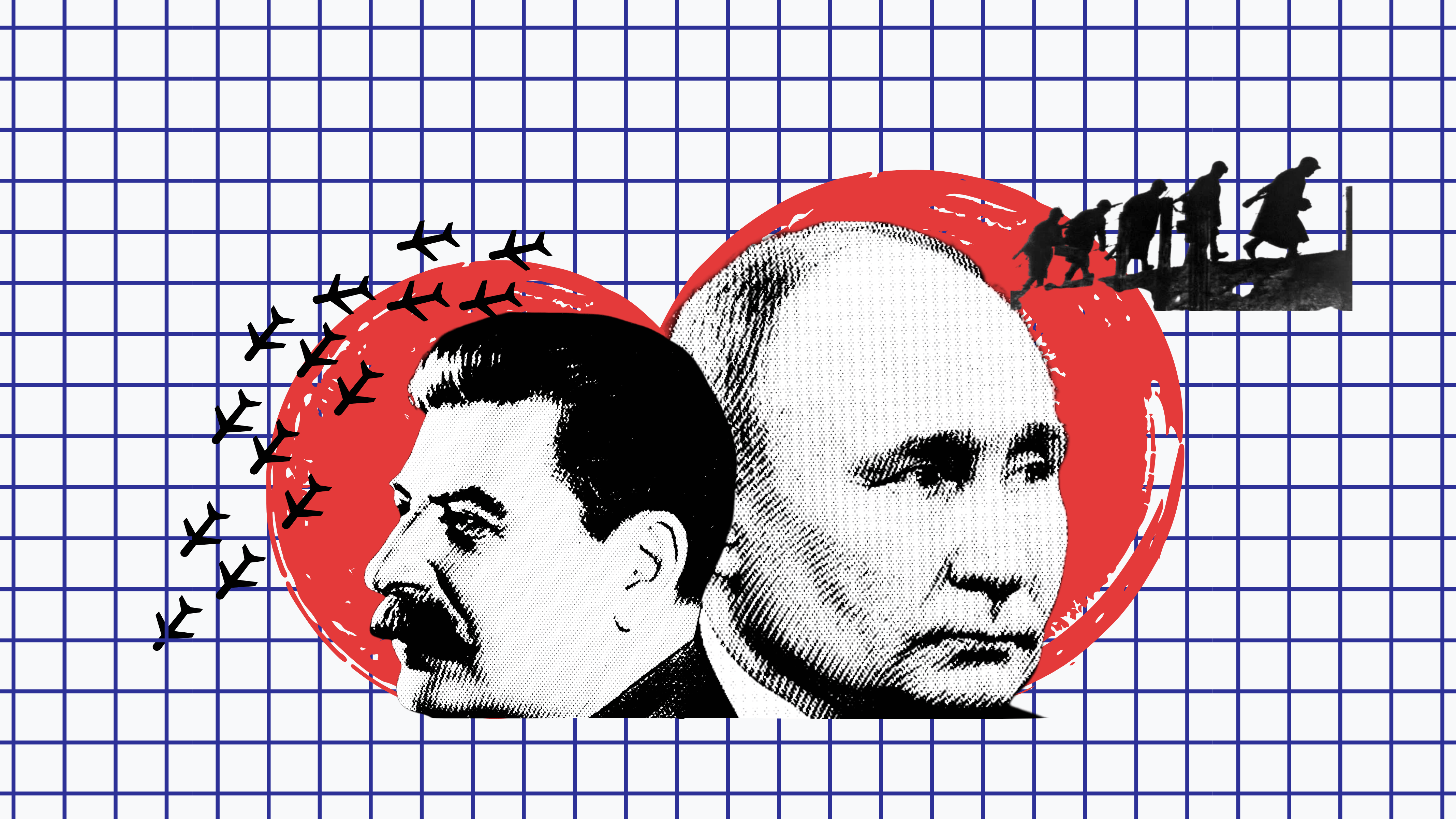
The temptation is to answer in the language of strategic choice: that Moscow’s political and military leadership decides, war by war, to wage conflict in the way that best serves its objectives, and that the destruction of Ukrainian cities and energy grids is simply the latest such decision. There is real truth in this. The systematic campaign against Ukraine’s electricity and heating infrastructure across four successive winters reflects a deliberate coercive logic that runs to the top of the Russian state. But strategic choice is only half the explanation, and arguably the less interesting half. The other half lies in inheritance: the organizational structures, doctrinal traditions, command cultures, and operational habits that the Russian armed forces carry forward from their Soviet predecessor and from three decades of post-Soviet military experience.
Understanding this inheritance matters for two reasons. The first is explanatory. It helps account for why certain patterns persist even when they appear strategically counterproductive - why the Russian military reaches reflexively for massed indirect fires in urban environments, why it has struggled to conduct precision operations at scale despite possessing precision weapons, why combined arms integration repeatedly fails at the tactical level, why there is no observable apparatus for tracking or learning from civilian harm. These are not decisions made fresh each time. They are expressions of how the military is built. The second reason is anticipatory, and more practical. If a pattern of behaviour is embedded in organisational culture rather than driven by contingent calculation, it is likely to recur in future conflicts regardless of the specific political objectives at stake - which means Western defence planning can treat it as a structural feature of the threat environment rather than a variable that might change with the next set of war aims.
There is a substantial literature on Soviet military doctrine and a substantial literature on Russian military reform, but the two tend to be treated separately. The doctrinal scholarship remains largely at the level of theory; the reform scholarship tends toward organisational charts and force structure. What is less developed is the connective tissue between them: how inherited doctrinal assumptions and institutional cultures actually manifest in operational conduct, and what that tells us about the degree to which Russian warfighting is structurally determined as opposed to strategically chosen. This piece is an attempt to supply some of that connective tissue, organised around four interlocking questions: what the key legacies are and whether reform has altered them; how they manifest across Russia’s post-Soviet wars; where organisational culture ends and strategic choice begins; and what the analysis implies for anticipation and planning.
A Conceptual Frame: Choice and Inheritance
The distinction at the centre of this piece is easily blurred, so it is best stated plainly at the outset. Strategic choice refers to decisions made by the political-military leadership about the ends and means of a particular war: whether to invade, what to demand, which categories of target to strike, when to escalate or pause. Institutional inheritance refers to the deeper, slower-changing properties of the military organisation itself: the doctrine officers are taught, the way planning is conducted, the relationship between fires and maneuver, the structure of the command hierarchy, the presence or absence of a professional non-commissioned officer corps, the mechanisms (or their absence) for absorbing battlefield lessons. Choices are made in months; inheritance changes over decades, if at all.
The two interact in ways that are not always obvious. A pattern that looks like deliberate cruelty may in fact be the residue of an organisation that never developed the capability to do otherwise. A pattern that looks like institutional incompetence may in fact be a rational response to constraints the institution cannot escape. The analytically hard work - and the work that matters most for prediction - is disentangling these threads.
The framework here draws on two bodies of thought. The first is the strategic-culture tradition in security studies, which holds that states approach the use of force through durable, historically formed sets of assumptions about war that shape behaviour independently of any given leader’s preferences. Stephen Covington’s study for the Belfer Center argues that Russia possesses precisely such a culture of strategic thought - a framework that long predates Putin, survived the Soviet collapse, and continues to structure how Russia prepares for and conducts war.[2] The value of the strategic-culture lens, for present purposes, is that it directs attention away from the personalities of decision-makers and toward the deeper grammar within which they decide. The second body of thought is organisational theory’s insight that institutions encode the solutions to past problems and reproduce them even when circumstances change. Standard operating procedures, once established, persist because they are efficient, because they are legitimate within the organisation, and because changing them threatens the interests and identities built around them. Militaries are among the most path-dependent organisations in existence: they are large, hierarchical, resistant to external feedback, and they conduct their core activity so rarely that peacetime habits calcify into doctrine before they are ever tested. When they do fight, the feedback they receive is filtered through reporting systems that may be more concerned with appearances than accuracy. Russia’s military is an extreme case of this general phenomenon - extreme in the depth of its path dependence, in the rigidity of its hierarchy, and in the degree to which its internal feedback has historically been corrupted by the imperative to report success upward.
A caution is in order. The strategic-culture approach can slide into a kind of essentialism that explains everything and predicts nothing, treating “the Russian way of war” as an unchanging national character. That is not the claim here. The claim is narrower and falsifiable: that specific, identifiable institutional features - an artillery-centric operational logic, a weak NCO corps, a centralised command structure, the absence of a civilian-harm feedback mechanism - have demonstrably persisted across multiple wars and multiple reform efforts, and that their persistence is better explained by structural path dependence than by repeated fresh choice. Where those features have changed, as in some areas they have, the analysis should and does say so.
The Soviet Inheritance
Four features of the Soviet military system are most relevant to contemporary Russian warfighting. They are not a comprehensive account of Soviet doctrine; they are the specific inheritances that recur in Russia’s wars.
The first and most consequential is the primacy of fires over maneuver. Soviet operational art, developed across the twentieth century and refined into the deep-battle and deep-operations concepts of the interwar and post-war periods, conceived of artillery as the decisive arm - the “god of war,” in the phrase elaborated in Chris Bellamy’s study of Soviet artillery and rocket forces.[3] This was not simply a preference for big guns; it was a whole theory of how battles are won. Maneuver served fires as much as fires served maneuver: the purpose of movement was often to bring the enemy within reach of overwhelming bombardment, and the purpose of bombardment was to shatter the enemy so thoroughly that subsequent movement met little resistance. The Soviet army was, at its core, a system for delivering enormous quantities of high explosive onto an enemy and then advancing through the resulting devastation. Grau and Bartles, in their authoritative survey of the contemporary Russian ground forces for the U.S. Army’s Foreign Military Studies Office, show how thoroughly this fires-centric logic survived into the modern Russian army’s force structure, with maneuver brigades built around a density of artillery and rocket systems that has no Western equivalent.[4]
This was a rational design for the European theatre the Soviets expected to fight in, against NATO formations, on terrain where mass and tempo could compensate for any deficit in precision or individual initiative. But a force optimized for one kind of war carries that optimization into every other kind, and the fires-centric design embedded a reflex that would prove disastrous when transposed: when in difficulty, apply more fire. Against a dispersed insurgent enemy in a city full of civilians, the reflex that made sense against massed armour on the North German Plain becomes a mechanism for the systematic destruction of urban populations. The army did not decide, in each case, to flatten cities; it reached for the tool it trusted, and the tool was indiscriminate by design.
The second feature is the gap between doctrinal theory and operational practice. Soviet, and later Russian, military thought has long been conceptually sophisticated. Its theorists anticipated, decades in advance, the implications of precision and reconnaissance technologies for the vulnerability of massed formations - a point the Modern War Institute has made in arguing that the Russian way of war in Ukraine is “a military approach nine decades in the making,” conceptually ahead of its time even where its execution falls short.[5] But sophistication on paper has repeatedly failed to translate into capability in the field. The Marshall Center’s work on Russian strategic culture captures this with the concept of pokazukha - the staging of events for show, the maintenance of an appearance of capability that diverges from reality.[6] The Soviet system rewarded the demonstration of readiness over its substance; reporting flowed upward in the form superiors wished to receive. Robert Dalsjö, Michael Jonsson and Johan Norberg, writing in Survival after the 2022 invasion, described war as a brutal examination that ruthlessly reveals peacetime cheating - a formulation that captures precisely how an organisation can sustain a Potemkin image of its own competence until combat strips it away.[7]
The third feature is the weak development of decentralised leadership, most visibly in the near-absence of a professional non-commissioned officer (NCO) corps. Western militaries delegate substantial tactical authority to experienced enlisted leaders - sergeants who exercise initiative, hold units together under fire, and translate broad intent into local action. The Soviet system, inheriting an imperial army that was itself thin in long-service NCOs, built the Red Army after 1917 on the same top-heavy, officer-centric model rather than developing the empowered NCO cadre that industrial-age warfare increasingly demanded. Phillip Wasielewski has linked this directly to the broader pattern of Russian autocracy: a system that cannot tolerate decentralised initiative in its political life will not produce it in its military either, because the same instinct toward central control runs through both.[8] The result is a force that is rigid, slow to adapt at the point of contact, and dependent on officers for decisions that other armies push downward - a structural brittleness, not a training deficiency that better courses could fix.
The fourth feature, and the one that bears most directly on the targeting of civilians, is the absence of a systematic approach to civilian protection in military operations. The Soviet military developed no robust apparatus for distinguishing, in planning and execution, between combatants and non-combatants in the way that Western targeting law and practice came to require; nor did it develop mechanisms for tracking civilian harm or conducting after-action review on it. This is not to say that Soviet doctrine mandated atrocity. The more structural point is that civilian protection was simply never an organising category. A military that does not build the bureaucratic machinery to measure and limit civilian harm will not limit it, whatever its formal commitments - and will have no internal feedback loop that registers civilian harm as a problem to be corrected.
Tracing the Threads: The Post-Soviet Wars
These four inheritances can be followed forward through Russia’s post-Soviet conflicts. The exercise is not comprehensive campaign history; it is a focused tracing of whether the patterns represent genuine continuity of institutional culture or merely convergent responses to similar circumstances.
Chechnya: The Critical Link
The two Chechen wars are the indispensable connection between the Soviet inheritance and contemporary Russian conduct. The first war, from 1994 to 1996, exposed the catastrophic decay of the Soviet system. The assault on Grozny in the winter of 1994–95 was a disaster: armoured columns pushed into a defended city without adequate infantry support or reconnaissance, were cut apart by Chechen fighters, and the Russian response - as Olga Oliker documented in her RAND study of the wars - was to fall back on the one tool the army reliably possessed, massed artillery and air bombardment, reducing much of the city to rubble.[9] The combined-arms failure and the reflexive recourse to fires were both straight inheritances from the Soviet model under conditions of decay.
The second war, beginning in 1999, is the more revealing case, because the Russian military had five years to absorb the lessons of the first - and the lessons it absorbed are diagnostic of its institutional character. As Oliker’s analysis makes clear, Russian commanders concluded not that they needed to master urban combined-arms warfare but that they could avoid it: artillery and air strikes, they believed, would force the defenders into submission before close combat became necessary. This is a subtle but crucial point. Faced with the catastrophic failure of 1994–95, a military capable of deep structural learning might have invested in the difficult competencies that failure had exposed - infantry-armour-artillery coordination, urban maneuver, the decentralised initiative that close fighting in cities demands. The Russian military instead chose to lean harder on the competency it already had. It made a conscious decision not to develop the harder capability, justified by confidence in the easier one. The “improvement” between the wars was real but lopsided: the Russians got significantly better at a number of tasks while continuing to neglect the urban mission specifically, in the belief that it could be bypassed.
When the Chechens dug in regardless of the bombardment, the belief proved false, and the result was the systematic shelling of Grozny once more, alongside the broader treatment of the civilian population as an undifferentiated part of the operational problem - the conflation of counterinsurgency with population control. The patterns visible here, massed fires against urban centres and the collective treatment of civilians, would reappear with little modification in later wars. Chechnya is where the Soviet inheritance, under post-Soviet conditions, hardened into a recognisable Russian operational signature - and where the army demonstrated that its response to failure is not structural reform but the intensification of inherited reflex.
Georgia 2008: Catalyst for Reforms
The brief 2008 war with Georgia is less important for its conduct than for its consequences. Russia prevailed quickly, but the campaign exposed serious deficiencies - in command and control, in the coordination of air and ground forces, in communications, and in the age of much of the equipment - that prompted the most serious attempt at reform in the post-Soviet period. The reforms associated with Defence Minister Anatoly Serdyukov, and continued in modified form under his successor Sergei Shoigu, sought to create a smaller, more professional, more rapidly deployable force: fewer cadre formations maintained at skeleton strength and more permanently ready units, more contract soldiers (kontraktniki) alongside conscripts, a streamlined command structure, and a modernized arsenal.[10]
The question that hangs over the entire reform programme, and over this analysis, is how deep the changes went - whether they altered the army’s underlying culture or merely its surface. The evidence of Ukraine suggests the latter, and the reason is instructive. Reforms of force structure and procurement are, relatively speaking, the easy kind: they can be decreed from the top, funded, and displayed. The harder changes are cultural and cannot be decreed. A professional NCO corps cannot be created by reorganisation alone; it requires a sustained shift in where authority sits, which the conscript-based model and the autocratic instinct toward central control both resist. Decentralised tactical initiative cannot be procured; it has to be cultivated and, crucially, tolerated, which a hierarchy built on upward deference will not do. Honest internal reporting cannot be mandated by a ministry that itself depends on the appearance of success. The Serdyukov–Shoigu reforms procured new equipment and reorganised formations, but they did not, and arguably could not, manufacture the NCO corps, the decentralised initiative, the effective combined-arms integration at the tactical level, or the culture of honest reporting - the very things that distinguish a structurally capable military from one that merely looks the part. The reform touched the layer that responds to money and decree and left untouched the layer that responds only to slow cultural change.
Syria: The Expeditionary Rehearsal
The Syrian intervention from 2015 served two functions for the Russian military. It allowed the practice of expeditionary operations in a relatively permissive environment and the integration of some Serdyukov–Shoigu-era reforms and newer systems; the Russian Aerospace Forces in particular treated Syria as a proving ground, rotating personnel through to accumulate combat experience. But the intervention also reinforced certain institutional habits, particularly around targeting standards and civilian harm. Human Rights Watch’s 2020 report Targeting Life in Idlib documented dozens of strikes by the Syrian-Russian alliance on hospitals, schools, markets, displaced-persons camps, and other civilian infrastructure during the 2019–20 campaign to retake Idlib governorate, attacks the organisation assessed as apparent war crimes that may amount to crimes against humanity.[11] HRW’s central finding was not that individual strikes went astray but that the destruction of civilian infrastructure was itself the strategy: a deliberate effort, in the organisation’s assessment, to render the area uninhabitable and force out its population so that government control could be restored. The pattern - repeated strikes on the objects that sustain ordinary civilian life, to coercive rather than narrowly military effect - is the same one that would later define the war in Ukraine, and seeing it rehearsed in Syria several years earlier is one of the strongest reasons to read it as something deeper than an improvisation of the current war.
An anecdote from Colonel Robert Hamilton, President of Delphi Global Research Center and my mentor on this work, gives the HRW finding an unusually direct illustration. In summer 2016, then assigned to the US Mission to the UN in Geneva as the Russia policy advisor on the small American team implementing the Cessation of Hostilities under UNSCR 2254, Hamilton met his Russian counterparts twice daily; one of his tasks was to confront them with the evidence of civilian targeting in Idlib, which the Russians and the Assad regime were systematically leveling even as Moscow served, formally, as a guarantor of the ceasefire. One morning, after a strike on a hospital, the head of the Russian military delegation pulled him aside. “You know,” the officer said, “everywhere we fight it’s the same thing. Every time we come up to a hospital some Dutch guy in glasses comes out and says ‘you can’t come in here, this place is protected by the Geneva Conventions’. And behind him, two dozen young guys with beards.” When Hamilton pointed out that combatants wounded in a hospital lose their combatant status and are no longer lawful targets, the officer looked at him “as if he were an idiot, shrugged, and walked off.” The exchange captures, with rare clarity, what the absence of a civilian-protection apparatus looks like from inside the institution: not denial of the facts but the conviction that the framework itself is naive.
That finding is worth dwelling on, because it complicates any simple separation of inheritance from choice. The Idlib campaign was clearly directed and purposeful; it was a strategy, not an accident of incompetence. Yet the strategy was one the institution was peculiarly well suited to execute, drawing on the same fires-centric disposition and the same absence of civilian-protection machinery traced from the Soviet model through Chechnya. Syria mattered not because it taught the Russian military to target civilians but because it allowed an inherited disposition toward the destruction of civilian infrastructure to be harnessed to an explicit coercive purpose, at scale, in a modern context, without internal check or correction. The Marshall Center’s analysis of continuity in Russian strategic culture, examining precisely the Syrian campaign, reached a parallel conclusion: that what looked like a new expeditionary Russia was in important respects the old organisation operating in a new theatre. Syria was the rehearsal; the script was inherited.
Ukraine: Inheritance at Full Scale
In Ukraine, every thread converges. The opening phase of the 2022 invasion was, as Dalsjö, Jonsson and Norberg detailed, a comprehensive failure of the reformed military - breakdowns in logistics, command and control, and morale; a road-bound advance that could not sustain itself; an air force that flew surprisingly few sorties; the loss of senior officers forced forward to do the work that an NCO corps would otherwise have done. The Potemkin image collapsed under the brutal examination of war. And when the initial gambit failed, the military did what its inheritance dictated: it reverted to massed fires and positional warfare, grinding through Ukrainian towns with the artillery-centric approach that runs from the Soviet model through Grozny to the present. British defence assessments in late 2022 described Russian tactics as largely unchanged since the Second World War[12] - an overstatement at the conceptual level, but an accurate description of the operational reflex.
The campaign against Ukraine’s energy infrastructure is where inheritance and choice are hardest to separate, and therefore most instructive. Across four winters, Russia has conducted what analysts have characterised as a phased evolution: from strikes on the transmission grid in the winter of 2022–23, intended to disconnect power plants from consumers and cause rolling blackouts; to a pivot in 2024 toward generation itself, destroying power plants and, by some industry accounts, the great majority of certain operators’ generating capacity; to a still broader campaign by late 2025 that added natural-gas infrastructure to the target set in an effort to deny Ukraine the ability to heat its homes. The International Energy Agency and United Nations monitors have tracked thousands of disruptions and the seasonal intensification of attacks timed to the onset of winter.[13] This is plainly a deliberate strategy directed from the political level. But it is also legible as the operationalisation of an inherited doctrinal concept. The CNA analysis of Russian military strategy describes the prevailing framework of “active defense” as resting on a theory of victory premised on degrading an opponent’s military-economic potential - including critical infrastructure in the adversary’s homeland - rather than on the seizure of territory.[14] The energy campaign is the meeting point of a top-level coercive choice and a doctrine that already designated the enemy’s economic fabric as a legitimate strategic target.
Where Culture Ends and Choice Begins
The Ukraine energy campaign sets up the central analytical problem cleanly, and the distinction repays careful handling, because getting it wrong in either direction produces bad predictions.
Consider three patterns. The first is the reflexive use of massed indirect fires in populated areas. This is best understood as institutional inheritance. It runs continuously from Soviet operational art through both Chechen wars, Syria, and Ukraine; it persists across changes of leadership, doctrine documents, and political objective; and it persists even where it is counterproductive, alienating populations and consuming ammunition for marginal gains. It is what the army does because it is what the army is built to do. The implication is that it will recur in any future conflict in which Russia fights at scale, irrespective of war aims.
The second is the strategic targeting of civilian infrastructure as a coercive instrument - the energy campaign being the clearest case. This is better understood as strategic choice operating on an inherited foundation. The decision to make Ukrainian civilians cold and dark through the winter is a political act with a coercive purpose, calibrated and adjusted over time; the pause and resumption of strikes in 2025 shows responsiveness to political circumstance that pure institutional reflex would not display. But the choice draws on a doctrinal inheritance that already treats the adversary’s economic and infrastructural base as a valid object of strategic attack, and on an institutional history - Syria above all - in which the destruction of civilian infrastructure was practiced without internal sanction. Choice and inheritance are here entangled rather than separable: the leadership chose a path the institution had already paved.
The third is the apparent inability to conduct precision operations reliably at scale. This looks like strategic choice - a decision to fight crudely - but is better read as institutional constraint. Russia possesses precision weapons and has used them; what it has struggled to do is integrate sensors, decision-making, and precision effects into a reliable, repeatable system across a large force, particularly under the pressures of attrition and at the tempo modern war demands. The constraint is structural: it reflects the same deficits in decentralised initiative, honest reporting, and combined-arms integration that recur throughout this analysis. The leadership may well wish to fight more precisely; the system cannot consistently deliver it. Reading this as choice would lead a planner to expect Russian precision to scale up with political will, when in fact it is gated by institutional features that will not change quickly.
The general principle that emerges is this. Where a pattern is continuous across wars, persistent across leadership and doctrine, and stubborn in the face of its own costs, it is probably inheritance, and should be treated as a fixed feature. Where a pattern is calibrated, reversible, and responsive to political circumstance, it is probably choice - but choice almost always operates on inherited material, selecting from the repertoire the institution makes available rather than inventing freely. Rather than rival explanations, the two are better understood as different layers of the same phenomenon.
Is Ukraine Changing the Institution?
A serious treatment of inheritance has to confront the possibility that the most demanding war in Russia’s post-Soviet history is reshaping the institution in real time. There is genuine evidence of adaptation. Russian forces, catastrophically unprepared for drone warfare in 2022, became sophisticated practitioners by 2025; they reorganised electronic-warfare employment, adapted artillery tactics to the counter-battery threat posed by precision rocket systems, hardened command-and-control, and - following Ukraine’s organisational lead - stood up dedicated unmanned-systems forces, formally operational by late 2025. Analysts writing in 2025 and 2026 have documented Russia embedding battlefield lessons into doctrine, force structure, and the defence-industrial base, and have credited the military with a capacity for rapid tactical learning that earlier assessments underrated.[15]
But the character of this adaptation is itself revealing, and it cuts in the direction of the inheritance argument rather than against it. The learning is overwhelmingly tactical and technological rather than cultural and structural. Russia has proven able to adopt new tools and techniques - often by copying Ukrainian innovations on a lag of several months - without altering the deeper features that constrain it: the centralised command structure, the weak NCO corps, the difficulty with combined-arms integration, the absence of any apparatus registering civilian harm as a problem. The adaptation is reactive, trailing rather than leading, and it operates within the inherited frame rather than transforming it. This is consistent with a kind of institutional Darwinism in which the structures and habits that survive a long war are precisely those most deeply embedded - the war reinforcing the core while permitting change only at the technological surface. A military can field drone units and resilient command nodes while remaining, in its essential operating logic, the artillery-centric, centrally controlled, civilian-harm-indifferent institution it has been for decades. Nothing in the adaptation observed to date suggests that the structural features at the centre of this analysis - the reflexive fires, the treatment of civilian infrastructure as a strategic target set, the absence of internal correction on civilian harm - are eroding. If anything, the war has rewarded them.
Implications for Anticipation and Planning
If the analysis here is broadly correct, several conclusions follow for Western defence planning and for the anticipation of Russian behaviour in future contingencies.
Most importantly, the patterns of greatest concern in Russian warfighting should be treated as structural features of the threat environment rather than as contingent behaviours that might change under different circumstances. A future Russian campaign, whatever its political object, should be expected to default to massed fires in populated areas, to treat civilian infrastructure as a legitimate object of strategic attack, and to operate without effective internal constraint on civilian harm. These are not predictions about intentions, which may vary; they are predictions about the repertoire the institution will draw on, which is stable. Planning assumptions, force protection, and the protection of civilian populations and infrastructure in any state bordering Russia should be calibrated accordingly.
A second implication follows: capability constraints that look like choices should not be expected to relax with political will alone. Russia’s difficulty with reliable, scaled precision and with combined-arms integration is structural; an adversary should not assume that a more determined or better-resourced Russia would suddenly fight in a discriminating Western manner. By the same token, this constraint is a vulnerability, and one that Western forces and Ukraine have repeatedly exploited.
Adaptation, finally, should be expected at the technological and tactical level and discounted at the structural level. Russia will continue to absorb new tools and copy successful innovations, often quickly. It should not be expected to develop, on any near horizon, the decentralised initiative, honest internal feedback, or culture of civilian protection that it has lacked for a century. Planning that assumes Russian tactical learning is prudent; planning that assumes Russian structural transformation is not.
Finally, the entanglement of choice and inheritance has a forward-looking corollary. Because choice operates on inherited material, the documented patterns of civilian harm in this war are not merely evidence of what Russia has chosen to do this time; they are evidence of what the institution makes available to be chosen in the next conflict. The inheritance is the menu. The leadership selects from it. Anticipating Russian conduct means reading both - the standing repertoire and the political appetite to use it - and recognizing that the former is far more stable, and therefore far more predictable, than the latter.
Conclusion
Russia fights the way it does for reasons that are partly chosen and partly inherited, and the analytical task is to hold both in view without collapsing one into the other. The targeting of civilians and civilian infrastructure that has characterised the war in Ukraine is, at the level of any given war, a strategic choice. But it is a choice made by a particular institution, drawing on a particular inheritance: an artillery-centric operational tradition, a chronic gap between conceptual sophistication and field capability, a command culture that suppresses initiative and honest reporting, and the long absence of any structural commitment to limiting civilian harm. These inheritances have survived the collapse of the Soviet Union, three decades of reform, and the brutal examination of the largest European war since 1945 - surviving, in some respects, precisely because that war has rewarded them. The judgment this analysis is meant to support is a single forward-looking one: that the most troubling patterns in Russian warfighting are not artifacts of this war alone but expressions of an institutional character that will outlast it, and should be planned for as such.
Sources
Adamsky, Dmitry (Dima). “Continuity in Russian Strategic Culture: A Case Study of Moscow’s Syrian Campaign.” Marshall Center Security Insights No. 48, February 2020.
Airwars / PAX. “An Assessment of Russia’s Rules of Engagement, Strike Policy and Adherence to International Law.” March 2019.
Baev, Pavel K. “From Chechnya to Syria: The Evolution of Russia’s Counter-Terrorist Policy.” Ifri, April 2018.
Bartles, Charles K. “Defense Reforms of Russian Defense Minister Anatolii Serdyukov.” Journal of Slavic Military Studies 24, no. 1 (2011).
Bellamy, Chris. Red God of War: Soviet Artillery and Rocket Forces. London: Brassey’s, 1986.
CNA (Michael Kofman et al.). “Russian Military Strategy: Core Tenets and Operational Concepts.” CNA Research Report, August 2021.
Covington, Stephen R. “The Culture of Strategic Thought Behind Russia’s Modern Approaches to Warfare.” Belfer Center for Science and International Affairs, Harvard Kennedy School, October 2016.
Dalsjö, Robert, Michael Jonsson and Johan Norberg. “A Brutal Examination: Russian Military Capability in Light of the Ukraine War.” Survival 64, no. 3 (2022): 7–28.
Defense One (Caitlin M. Kenney). “NCOs: America Has Them, China Wants Them, Russia Is Struggling Without Them.” May 2022.
Delphi Global Research Center. “Targeting as Strategy: Civilian Harm in Ukraine as a Forward Indicator of Russian Intent.”
Foreign Policy Research Institute. “The Roots of Russian Military Dysfunction.” 2023.
Grau, Lester W. and Charles K. Bartles. The Russian Way of War: Force Structure, Tactics, and Modernization of the Russian Ground Forces. Fort Leavenworth: Foreign Military Studies Office, 2016.
Human Rights Watch. “‘Targeting Life in Idlib’: Syrian and Russian Strikes on Civilian Infrastructure.” October 2020.
International Energy Agency. “Ukraine’s Energy Security: A Pre-Winter Assessment.” October 2025; and “Ukraine’s Energy Security and the Coming Winter.” September 2024.
Marshall Center. “The Transformation of Russian Military Doctrine: Lessons Learned from Kosovo and Chechnya.” Marshall Center Papers, 2002.
Military Review (Vytis Andreika). “Lessons from Ukraine: Russia’s Changes in the Conduct of War - Adapting Technology, Force Structures and the Defence Industry.” September–October 2025.
Modern War Institute, West Point. “The Russian Way of War in Ukraine: A Military Approach Nine Decades in the Making.” June 2023.
Oliker, Olga. Russia’s Chechen Wars 1994–2000: Lessons from Urban Combat. Santa Monica: RAND Corporation, 2001.
RealClearDefense. “Enduring Defeat: The Cyclical Failures of Russian Military Culture.” March 2025.
Small Wars Journal. “The Authoritarians’ War: Assessing Russian Intervention in the Syrian Civil War.” April 2021.
UK Ministry of Defence. Defence Intelligence daily updates on Russian tactics in Ukraine, 2022.
UN Human Rights Monitoring Mission in Ukraine (HRMMU). Monthly protection-of-civilians updates, 2024–2025.
Watling, Jack and Nick Reynolds. “Meatgrinder: Russian Tactics in the Second Year of Its Invasion of Ukraine.” Royal United Services Institute (RUSI), 2023.
Endnotes
[1]Delphi Global Research Center, “Targeting as Strategy: Civilian Harm in Ukraine as a Forward Indicator of Russian Intent.”
[2]Stephen R. Covington, “The Culture of Strategic Thought Behind Russia’s Modern Approaches to Warfare,” Belfer Center for Science and International Affairs, Harvard Kennedy School, October 2016.
[3]Chris Bellamy, Red God of War: Soviet Artillery and Rocket Forces (London: Brassey’s, 1986).
[4]Lester W. Grau and Charles K. Bartles, The Russian Way of War: Force Structure, Tactics, and Modernization of the Russian Ground Forces (Fort Leavenworth: Foreign Military Studies Office, 2016), esp. the chapters on force structure and on the artillery and rocket forces, which detail the artillery density of Russian maneuver formations.
[5]Modern War Institute, West Point, “The Russian Way of War in Ukraine: A Military Approach Nine Decades in the Making,” June 2023.
[6]Dmitry (Dima) Adamsky, “Continuity in Russian Strategic Culture: A Case Study of Moscow’s Syrian Campaign,” Marshall Center Security Insights No. 48, February 2020.
[7]Robert Dalsjö, Michael Jonsson and Johan Norberg, “A Brutal Examination: Russian Military Capability in Light of the Ukraine War,” Survival 64, no. 3 (2022): 7–28.
[8]Phillip Wasielewski, Foreign Policy Research Institute, “The Roots of Russian Military Dysfunction,” March 31, 2023.
[9]Olga Oliker, Russia’s Chechen Wars 1994–2000: Lessons from Urban Combat (Santa Monica: RAND Corporation, 2001).
[10]On the Serdyukov reforms, see Charles K. Bartles, “Defense Reforms of Russian Defense Minister Anatolii Serdyukov,” Journal of Slavic Military Studies 24, no. 1 (2011).
[11]Human Rights Watch, “‘Targeting Life in Idlib’: Syrian and Russian Strikes on Civilian Infrastructure,” October 2020.
[12]UK Ministry of Defence, Defence Intelligence daily update on Ukraine, December 2022, assessing that Russian tactics were “largely unchanged since the Second World War” and describing a “reversion to positional warfare that has been largely abandoned by most modern Western militaries.”
[13]International Energy Agency, “Ukraine’s Energy Security: A Pre-Winter Assessment,” October 2025, reporting (per Ukraine’s Ministry of Energy) over 3,100 disruptions to the power sector between March and September 2025; see also UN Human Rights Monitoring Mission in Ukraine, monthly protection-of-civilians updates, 2024–2025.
[14]CNA, “Russian Military Strategy: Core Tenets and Operational Concepts,” August 2021.
[15]On Russian wartime adaptation, see Military Review, “Lessons from Ukraine: Russia’s Changes in the Conduct of War,” September–October 2025, and Jack Watling and Nick Reynolds, RUSI, on Russian tactical adaptation.
Related Research
GLAVNOE: The Past Month in Russia, June 2026
Your monthly overview of major recent developments in Russian politics, economy, and society. June 2026 Issue.
The War Has Reached Moscow, and the Russian Propaganda Machine Seems Lost
History shows that Russia rarely changes its behavior out of goodwill. But it has repeatedly changed its calculations when confronted with sufficiently strong and persistent pressure.